EcoProbiotic
EN
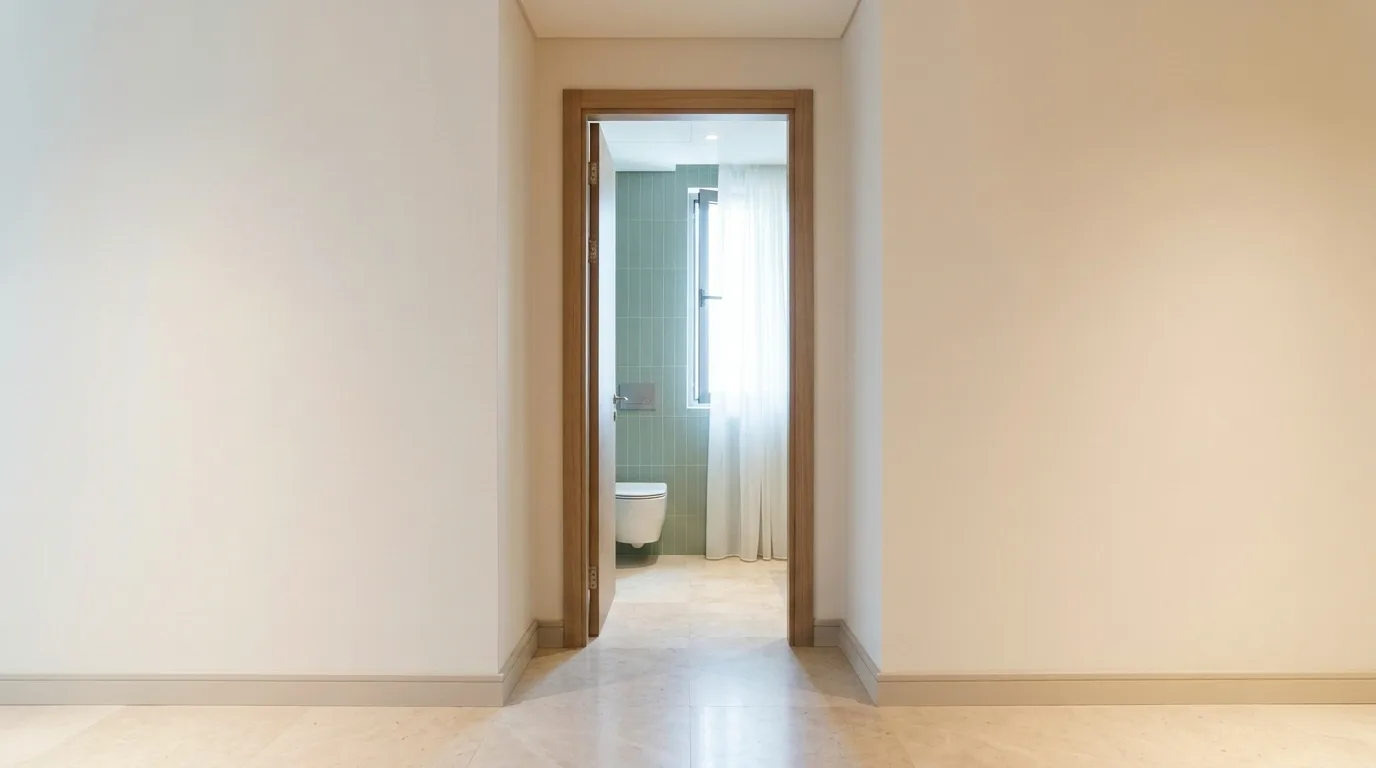
A closed wooden bathroom door in evening light, a thin line of light seeping from beneath it The door opens and daylight spreads from a fresh, bright bathroom into the hallway

Probiotic Bathroom & WC CleanerThe door closes.Freshness remains.

A fresh, odor-free bathroom behind a closed door. Not by masking the smell, but by reaching its source.

The true state of a bathroom shows once the door is closed. Even on a surface that looks clean, odor, moisture and invisible residue can build up. We look behind that door.

Moments behind the door

Most of what happens in a bathroom stays out of sight.

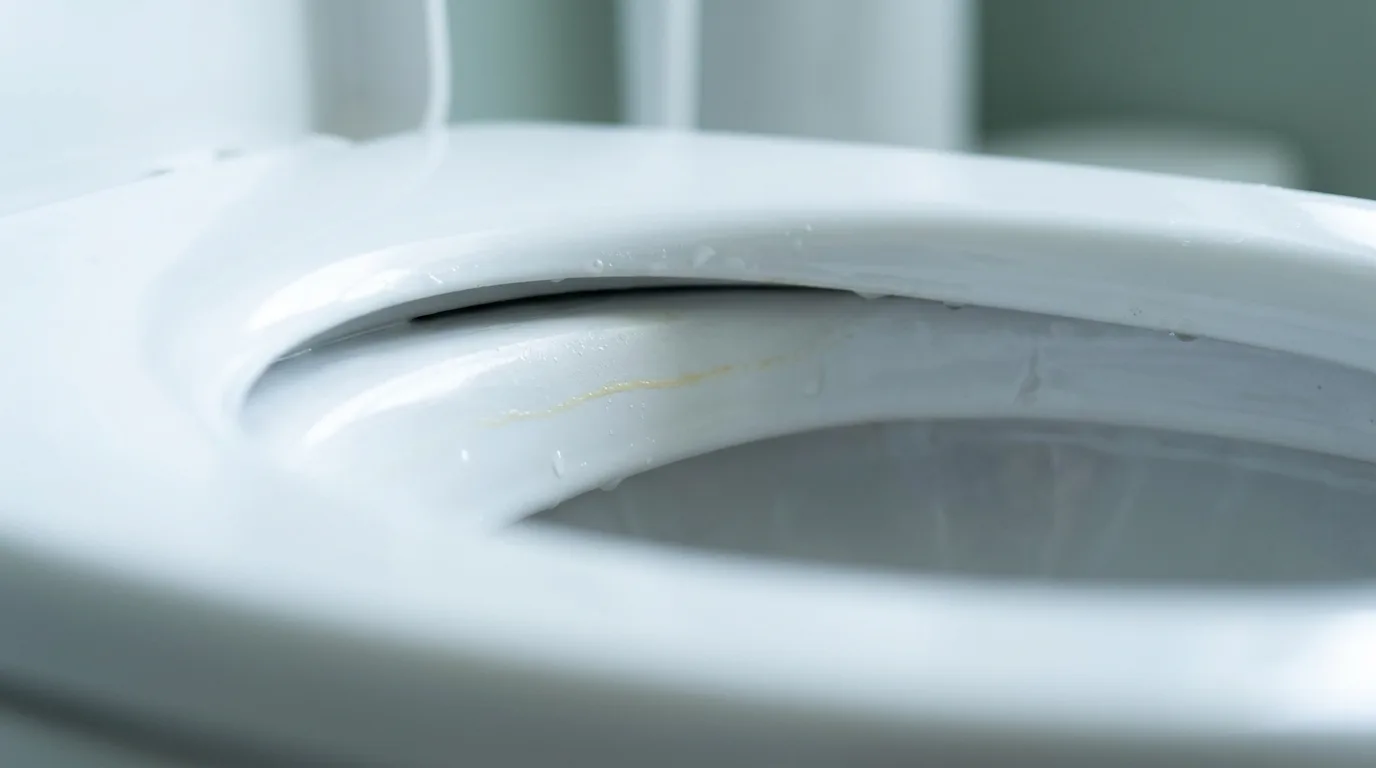
A thin yellowish line of residue under the rim of a white toilet bowl
Moment 01

The smell is never just one smell.

Toilet odor is the sum of several different molecules. When urea in urine breaks down, ammonia forms; when organic residue decomposes, sulfur compounds form.

Ammonia gives the sharp, familiar "urine" smell. The heavy, stubborn odor comes from sulfur compounds; our nose detects them even in tiny amounts in the air. That is why residue you cannot see still smells.

  • Ammonia
  • Sulfur compounds
  • Organic residue
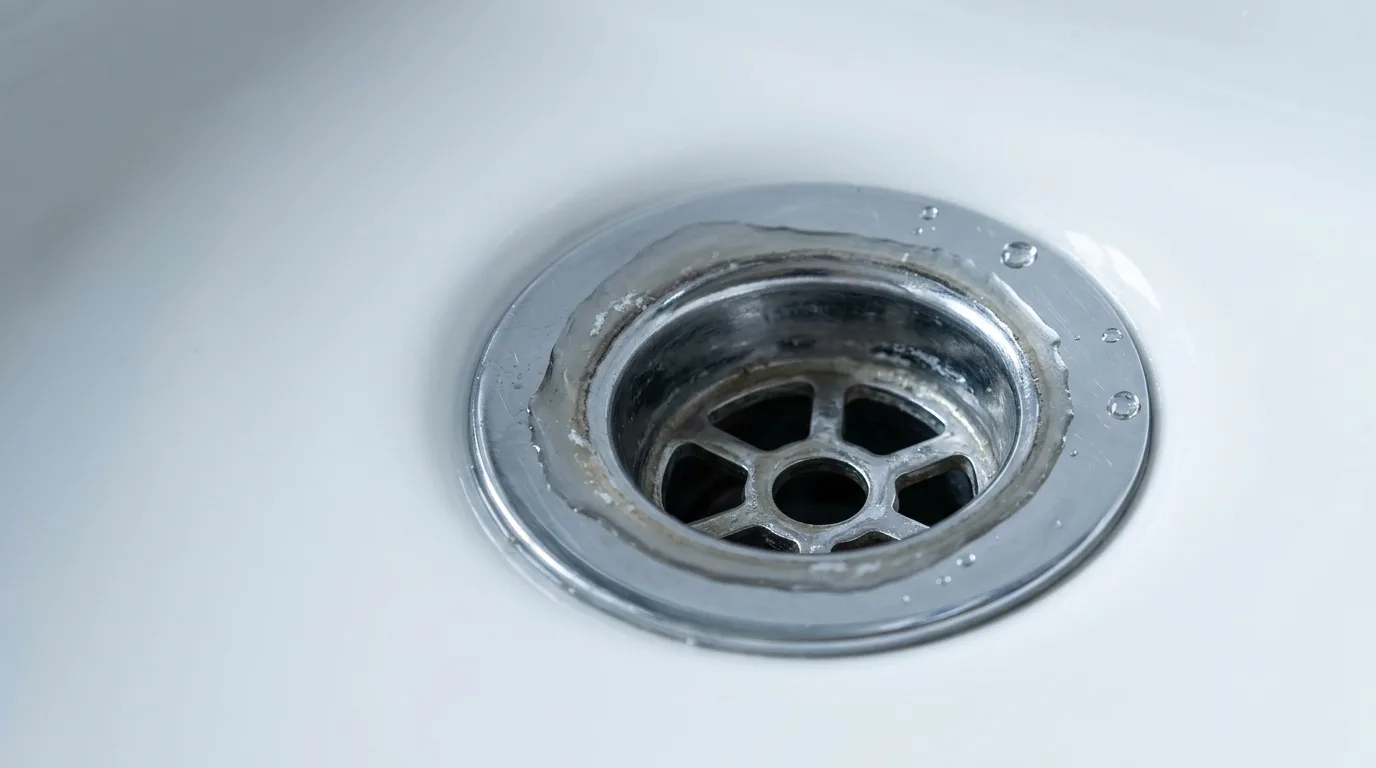
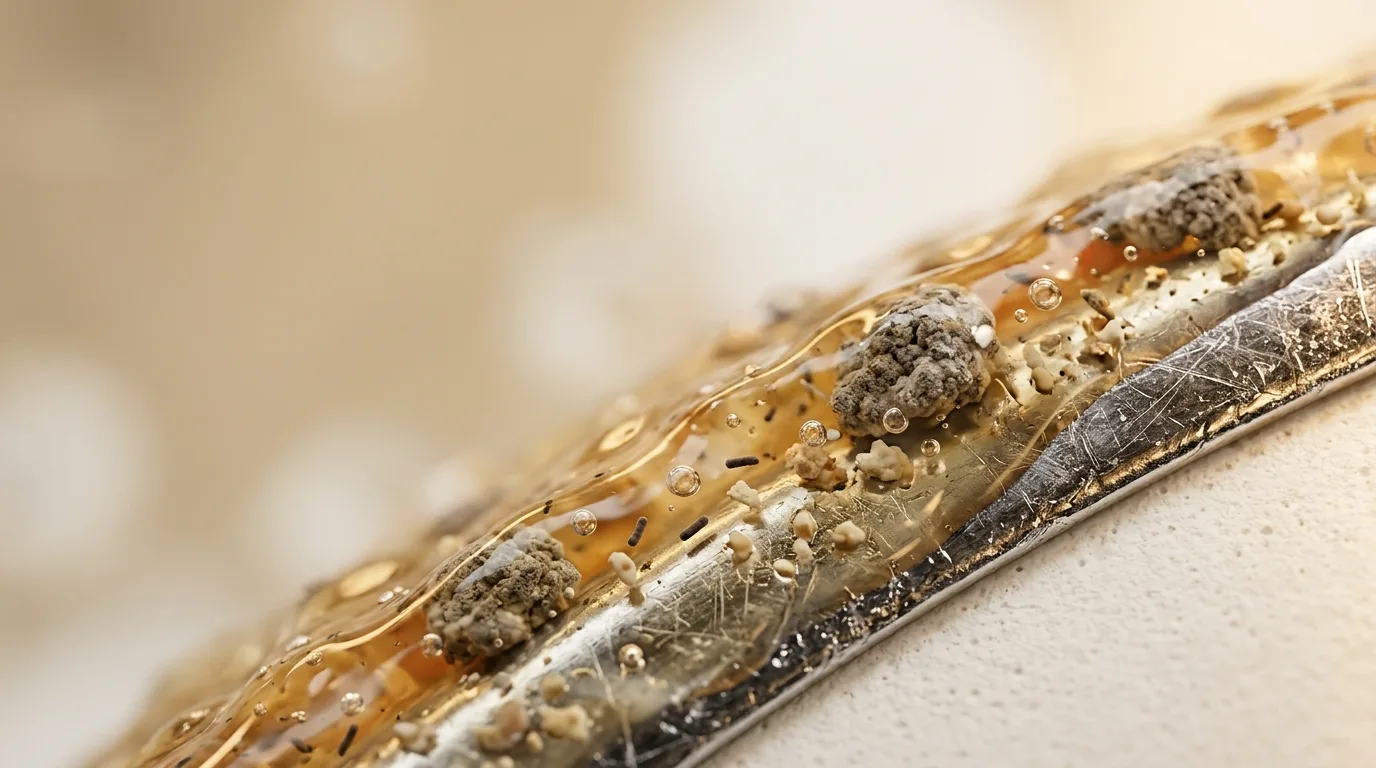
A thin, translucent film on the metal rim of a sink drain
Moment 02

The residue you don't see.

Most toilet yellowing is urine scale: a mineral deposit that forms as urine breaks down. The same process releases ammonia into the air, so yellow scale and the sharp smell are two sides of the same event.

The inner surfaces of drains and traps carry a dense layer of biofilm, and a large part of the bad smell comes from there. Research shows this layer can climb up toward the strainer and be carried onto nearby surfaces by splashing water.

  • Urine scale
  • Drain opening
  • Soap and shampoo film

So who are the probiotics in the bottle?

Naturally occurring, human-friendly, very small bacteria.

They multiply by dividing quickly, so a small amount of product can spread across a large surface. Once in the air, they linger for a while and then settle back onto surfaces. This is what sets probiotic cleaning apart: they stay on the surface after cleaning and work on the residue that builds up there. Now watch the same work on three different surfaces, under the microscope.

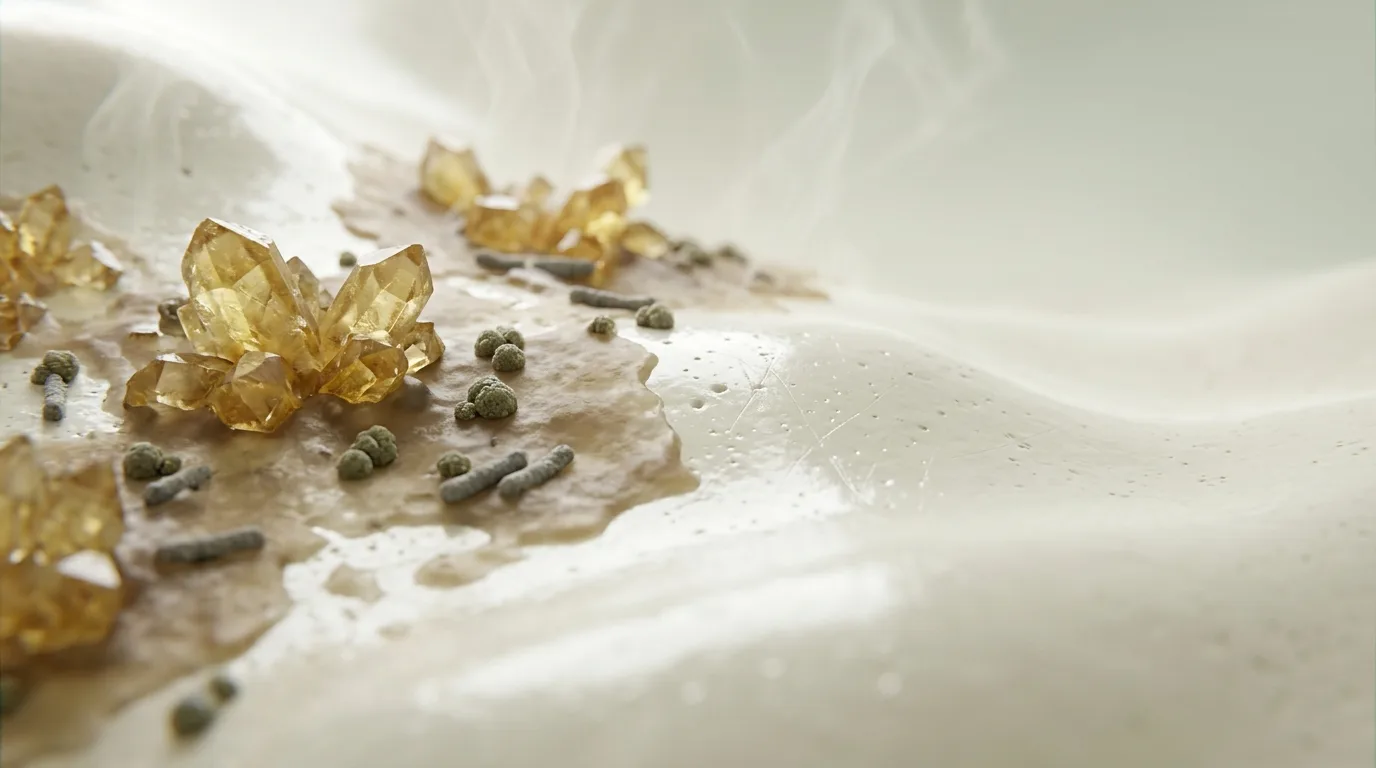
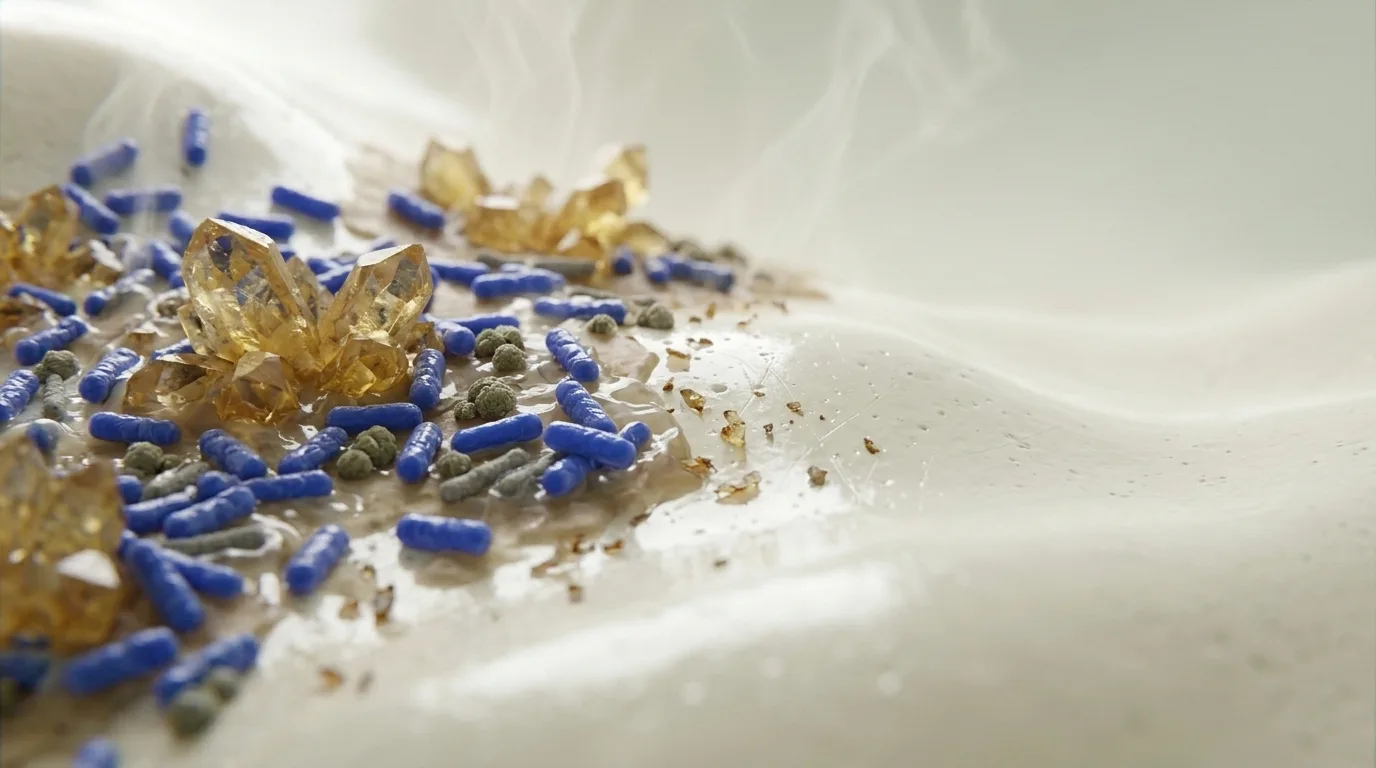
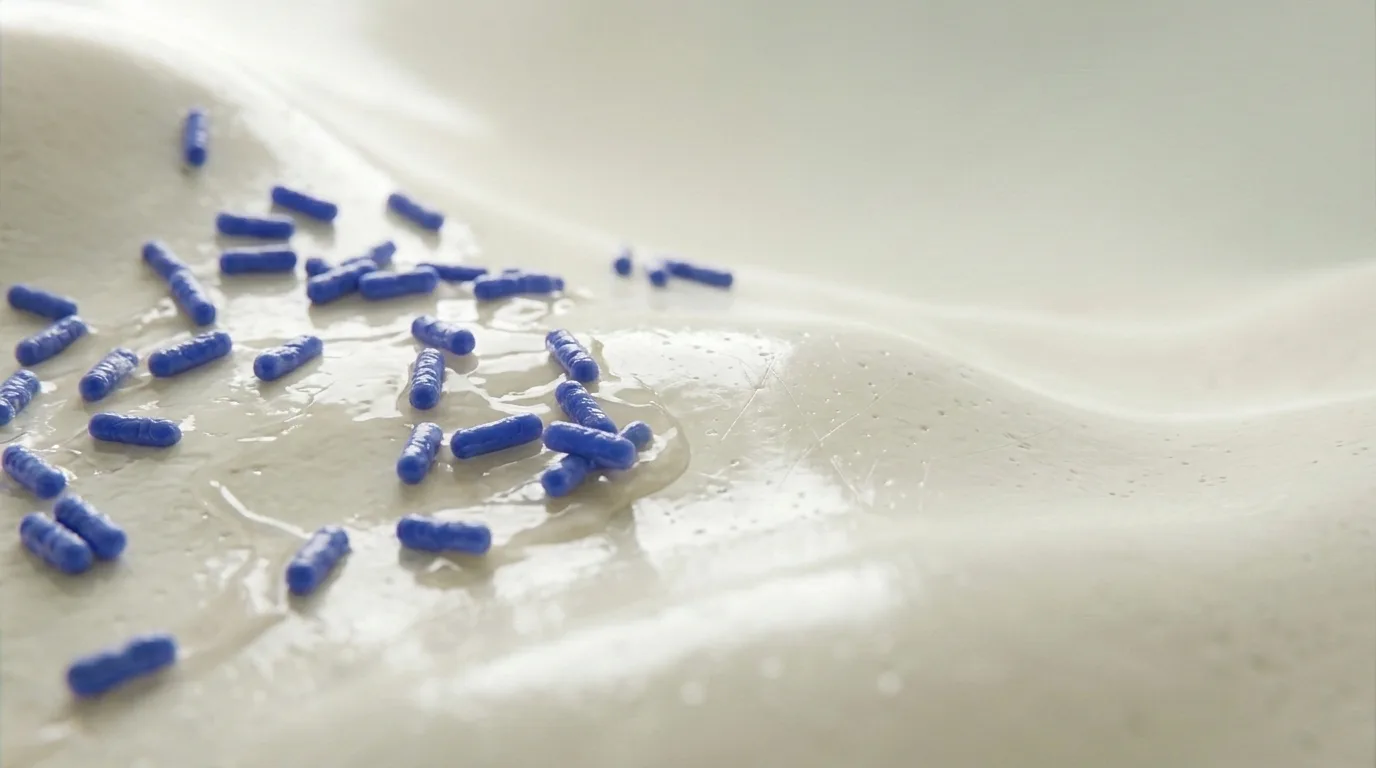
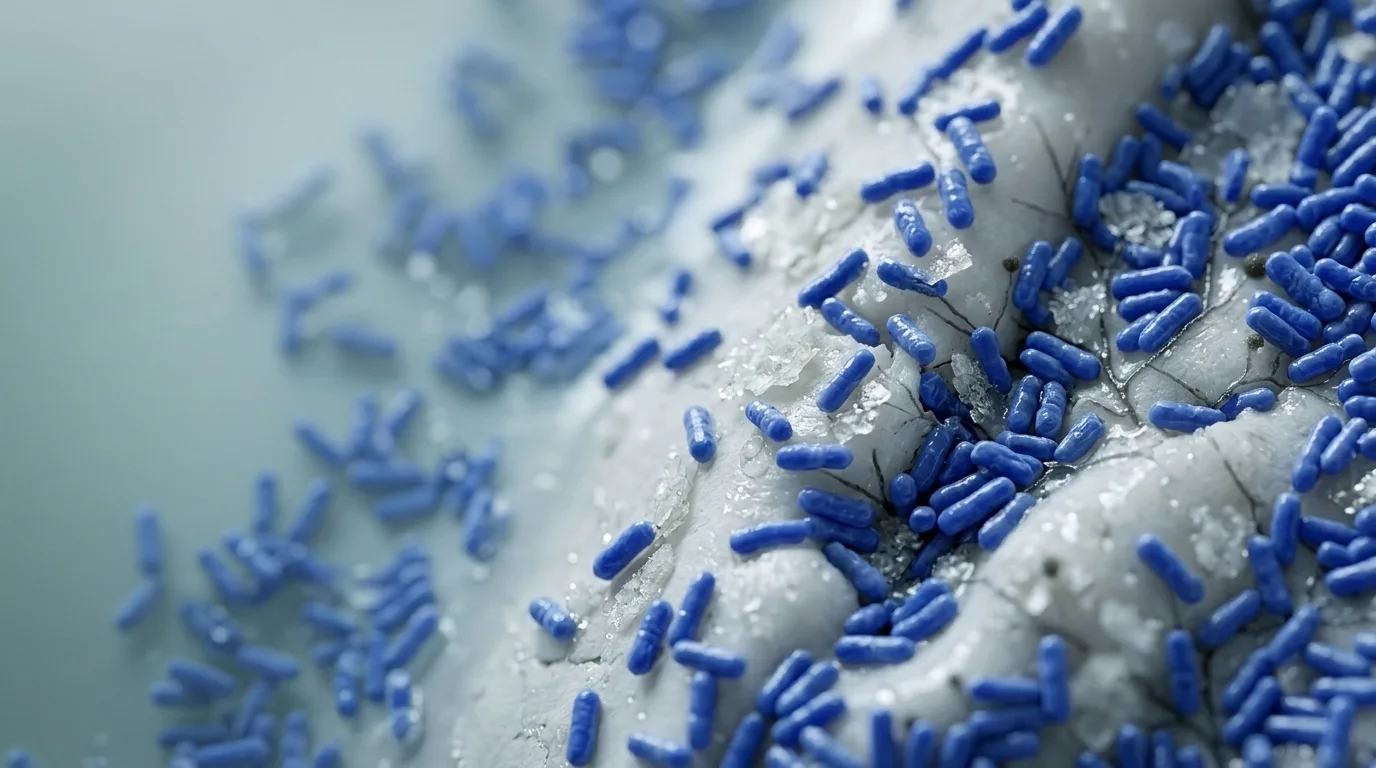
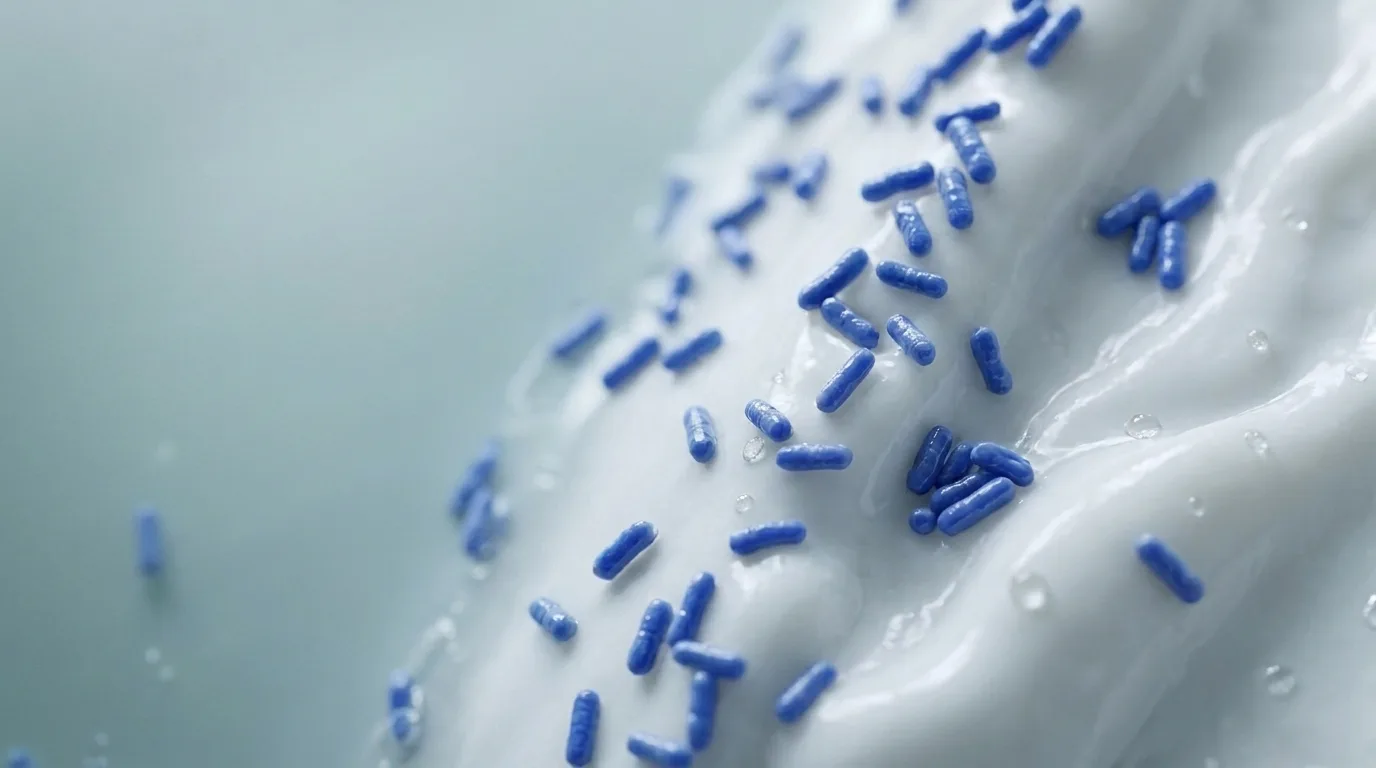
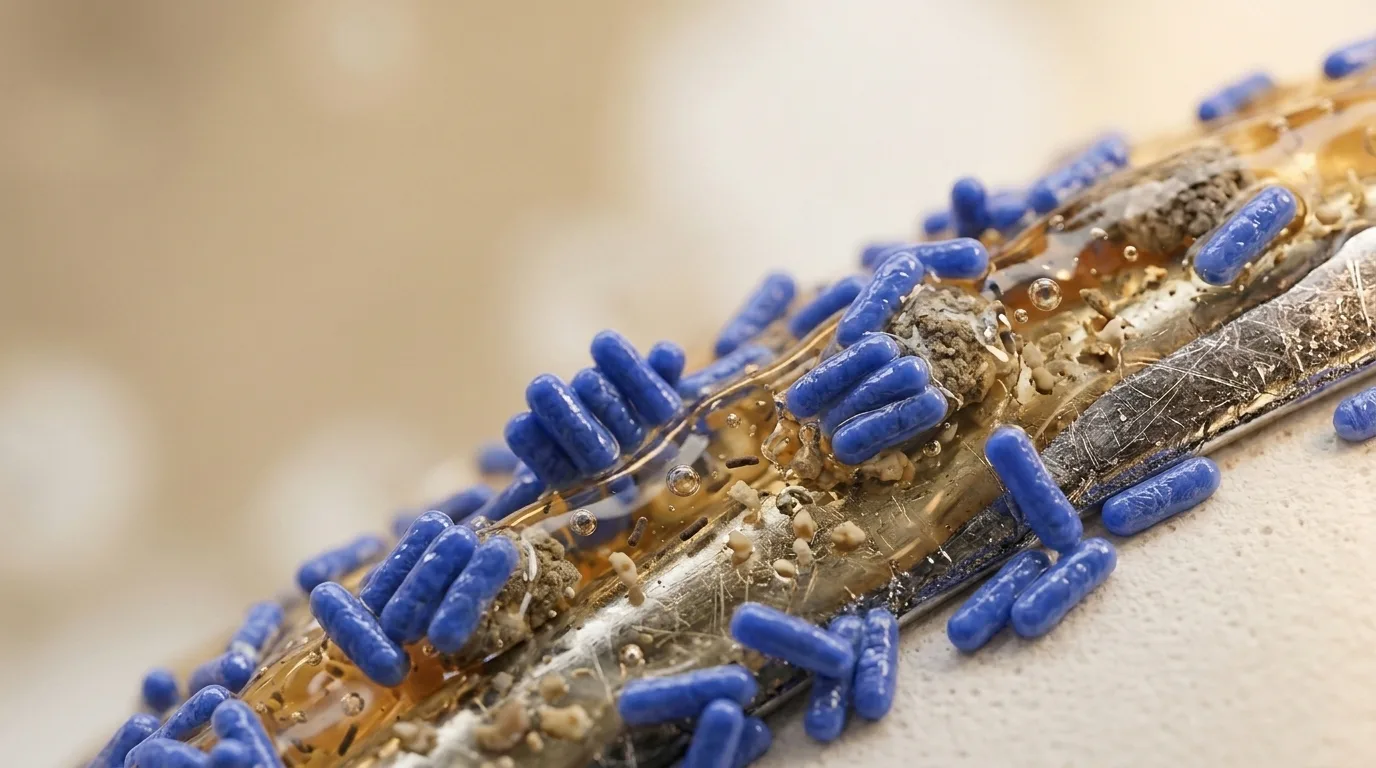
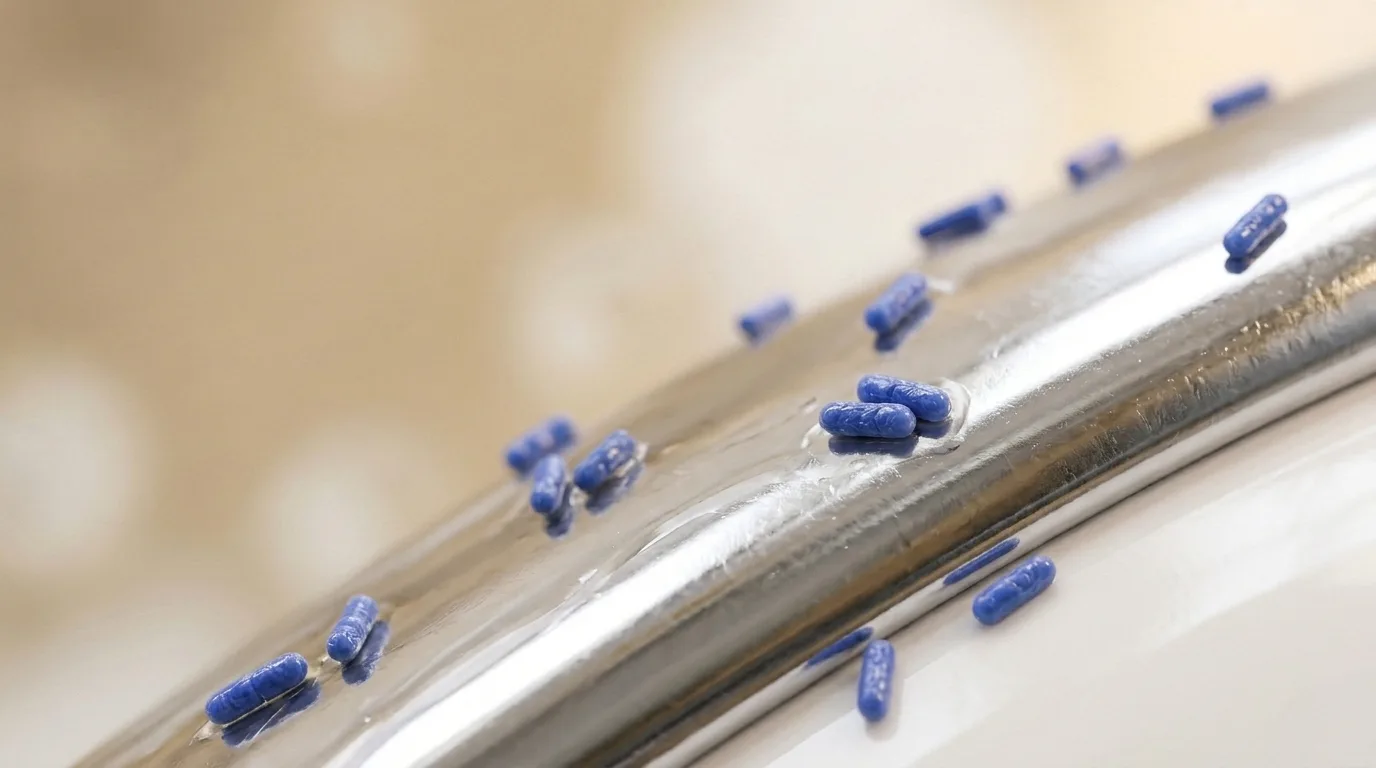
Microscopic view of yellow mineral crystals and a brown organic film on toilet glaze Blue rod-shaped probiotics settling among the residue on the toilet glaze A sparse layer of blue probiotics on clean, glossy toilet glaze Microscopic view of dark mold threads and soap residue on damp silicone sealant Blue probiotics spreading into the pores of damp silicone A calm layer of probiotics on dry, clean silicone Microscopic view of a honey-colored slimy biofilm on the rim of a sink drain Blue probiotics settling into the slimy layer on the drain rim Sparse blue probiotics on a shiny, clean drain rim Illustrative microscope image

It doesn't mask the smell; it reaches the source

Under the microscope: three surfaces.

  1. IToilet glaze
  2. IISilicone sealant
  3. IIIDrain opening
  1. ResidueUrine scale and organic film build up in the microscopic roughness of the toilet glaze. Ammonia and sulfur odors rise from here.
  2. Probiotics break down the residueWith the natural enzymes they secrete, they split the organic film into small pieces and use those pieces as food.
  3. They hold their ground on the surfaceThey stay on the surface after cleaning and compete for space and food. The effect builds up with regular use.
  1. Moisture and residueSoap and shampoo film builds up on silicone that stays wet after a shower; some bathroom fungi can use this residue as food.
  2. Probiotics spreadWhile it is wet, they spread into the pores and consume the residue. In laboratory studies, natural substances produced by this bacterial family reduced fungal attachment on silicone.
  3. Dry and freshAs the surface dries, a calm layer of probiotics remains.
  1. Slimy layerA slimy biofilm of residue and microorganisms forms around the drain opening; a large part of the bad smell comes from here.
  2. Probiotics settle inSprayed into the drain after the last use of the evening, the product has the whole night to work on the residue.
  3. Opening and surroundings cleanThe drain opening and the area around it freshen up.

Where does fresh air come from?

From residue to fresh air.

Freshness is not a layer of fragrance. It appears when the source feeding toilet odor and drain smell shrinks. What probiotics do on the surface, step by step:

  1. 01

    Organic residue

    Urine, soap, shampoo and skin oil leave a thin film on the surface. This residue is the raw material of odorous molecules.

  2. 02

    Enzymes break it down

    Natural enzymes secreted by the probiotics split the large molecules in the residue (proteins, fats) into small pieces.

  3. 03

    Used as food

    The probiotics consume these small pieces as food. The residue starts to disappear from the surface, unseen.

  4. 04

    They consume the dirt and produce oxygen

    Probiotics consume the dirt as food and produce oxygen. As the odor-causing residue decreases, so does the formation of odorous molecules such as ammonia and sulfur compounds.

  5. 05

    This is where fresh air comes from.

    As the dirt is used up and oxygen is produced, the bathroom air freshens and clean air forms. The smell is not masked; its source disappears. That is why the bathroom stays fresh even with the door closed.

What does toilet spray do?

It suppresses the smell and changes how you perceive it. The residue stays put; once the fragrance fades, the smell comes back.

What does probiotic cleaning do?

It targets the residue that causes the smell. With regular use it holds its ground on the surface and also works on newly built-up residue.

Moment 03

When you flush.

When a toilet is flushed, fine droplets mix into the air, linger for a while, then settle onto nearby surfaces. Researchers made this cloud visible with green laser light in a dark room.

Studies found that closing the toilet lid alone does not keep surfaces clear. So it is not just the inside of the bowl: the seat, the area around the toilet and the floor should be wiped regularly too.

  • 1SeatTop and underside, around the hinges
  • 2Around the toiletCistern, flush button, nearby wall
  • 3FloorIn front of and beside the toilet

Video: @aslinda.bilim · Studies: Crimaldi et al., Scientific Reports 2022; Goforth, Boone et al., American Journal of Infection Control 2024

Moment 04

The fog clears.
The damp stays.

The main cause of bathroom mold is moisture. The longer a surface stays wet, the more welcoming it becomes for mold.

Residue is food, too. Soap and shampoo residue can be a food source for some fungi that live in bathrooms.

The musty smell comes from volatile compounds released by microorganisms. The World Health Organization recommends preventing persistent indoor dampness.

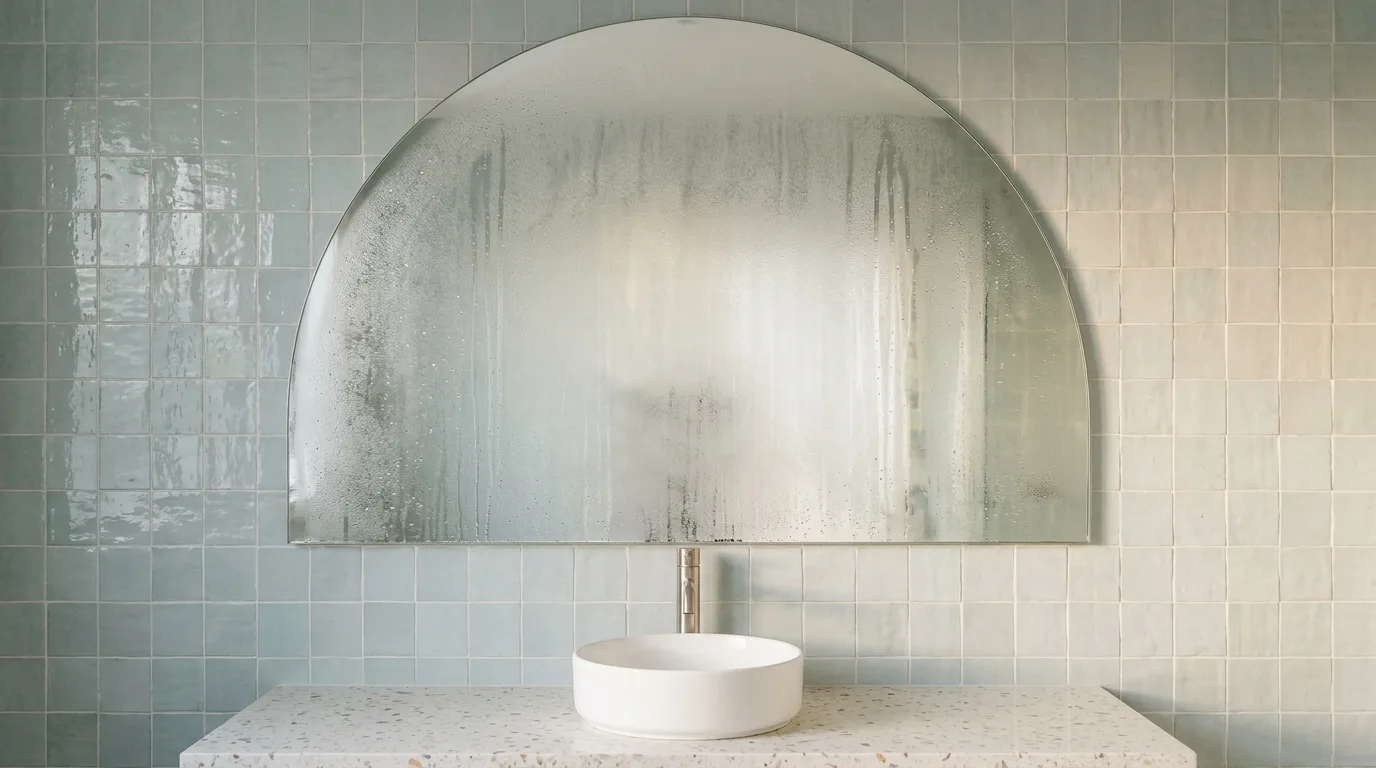
A clear, defogged mirror reflecting a fresh, bright bathroom An arched mirror fully fogged up after a hot shower
After the shower
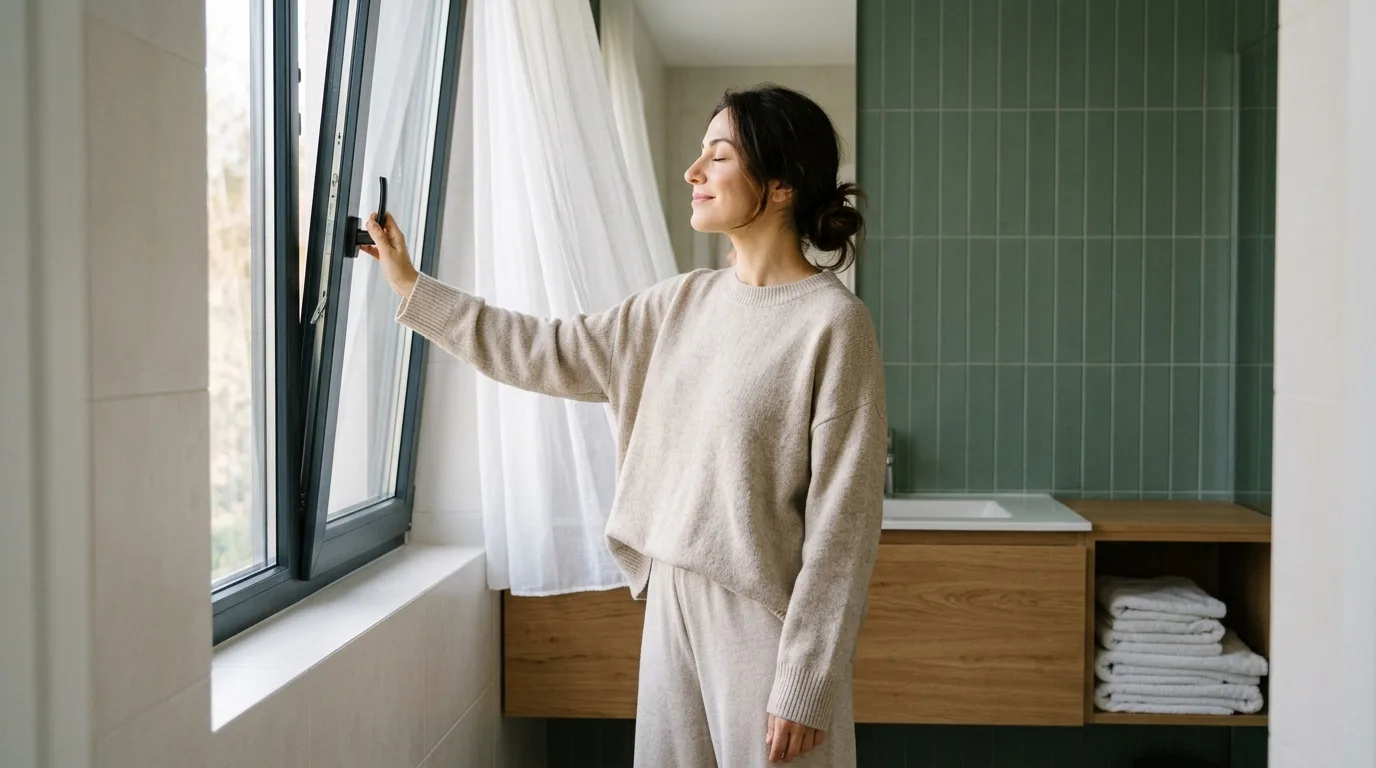
A woman opening the window in a bright bathroom and taking a deep breath

Probiotics that hold their ground on damp surfaces.

The probiotics in our product belong to a bacterial family that competes with molds in nature and is known, from laboratory studies, to produce natural compounds that target the mold cell wall and membrane.

By holding their ground on the cleaned surface, they aim to make it harder for unwanted microorganisms to settle back in. In laboratory studies, natural substances from this bacterial family reduced fungal attachment on silicone surfaces.

Best results: regular use + ventilation + drying after showers. Remove visible mold mechanically first.

Moment 05

After the chemicals.

Harsh chemicals quickly reduce the load on a surface. But research shows drain biofilm can come back within a few days. Follow the two paths side by side.

Harsh chemicals only

  1. Cleaning dayThe load drops fast; a sharp vapor lingers.
  2. A few days laterThe film rebuilds in the drain opening; the smell returns.
  3. Again and againThe returning layer may be more resilient.

Regular probiotic cleaning

  1. Cleaning dayThe residue is cleaned; probiotics stay on the surface.
  2. The following daysThey work on newly built-up residue and hold their ground.
  3. Within a few weeksThe effect builds up and settles in with regular use.

Images are illustrative. Sources: Bowie et al., Nature Communications 2026 · Vandini et al., PLoS One 2014.

What the science says

The studies behind every sentence on this page.

Who did it, what they did, what they found.

Switzerland · 2003

Urine scale and ammonia: two sides of the same process

What did they do?
They tracked how urine changes over time in urine-collecting pipes.
What did they find?
Bacteria living in the pipes break down the urea in urine; as conditions change, a mineral precipitate (urine scale) forms and ammonia is released into the air.

Udert KM et al. Water Research, 2003.

Japan · 2003

The nose detects the heaviest odors in the smallest amounts

What did they do?
For Japan's Ministry of the Environment, they measured the lowest level at which the human nose detects hundreds of odorous substances.
What did they find?
Sulfur compounds are perceived even in extremely small amounts in the air; ammonia needs a much higher level to be noticed.

Nagata Y. Ministry of the Environment, Japan, 2003.

Household drains · 2003

Household drains harbor a dense biofilm

What did they do?
They sampled sink drains in homes, examined the biofilm inside, and built a drain model in the laboratory.
What did they find?
A very dense and diverse community of microorganisms lives in drains; this community held steady in the laboratory model as well.

McBain AJ et al. Applied and Environmental Microbiology, 2003.

USA, Virginia · 2017

Drain biofilm climbs up to the strainer

What did they do?
They followed the path of biofilm in sink setups using fluorescently labeled bacteria.
What did they find?
As long as it found food, the biofilm climbed from the trap toward the strainer; from there, splashing tap water scattered droplets around.

Kotay S et al. Applied and Environmental Microbiology, 2017.

USA, Colorado · 2022

The flush plume made visible for the first time

What did they do?
In a dark room, they shone a green laser above a toilet and recorded the moment of flushing.
What did they find?
With the flush, a cloud of fine droplets rose quickly and spread through the room.

Crimaldi JP et al. Scientific Reports, 2022.

USA, Arizona · 2024

Droplets reach surfaces even with the lid closed

What did they do?
They added a test organism to household and public toilets, flushed with the lid open and closed, and measured the surrounding surfaces.
What did they find?
Whether the lid was open or closed did not noticeably change the amount landing on surfaces; droplets headed toward the floor and the front.

Goforth MP, Boone SA et al. American Journal of Infection Control, 2024.

World Health Organization · 2009

Indoor guidelines on dampness and mold

What did they do?
They brought together studies on indoor dampness and mold and prepared guidelines.
What did they find?
Water is the deciding factor for mold; preventing persistent dampness and mold is recommended. A surface that dries quickly is not harmed by getting wet.

World Health Organization. Guidelines for Indoor Air Quality: Dampness and Mould, 2009.

Japan · 2010

Bathroom fungi can feed on soap

What did they do?
They studied how fungal species repeatedly found in bathrooms grow.
What did they find?
These species can use the surfactants in soap and shampoo as food; in warm, dry conditions, however, they cannot grow well.

Hamada N, Abe N. Biocontrol Science, 2010.

USA, Yale · 2026

Biofilm returned after a single harsh chemical treatment

What did they do?
They applied a strong chemical foam to hospital sink drains and monitored the following weeks.
What did they find?
The biofilm first dropped quickly, then returned to its starting level within a few days; the returning layer showed more resilient traits.

Bowie KR et al. Nature Communications, 2026.

Italy · 2014 and 2018

Probiotic cleaning in hospital bathrooms

What did they do?
In several hospitals, surfaces including toilets, showers, sinks and floors were cleaned with probiotic cleaning products instead of conventional cleaning, and the surfaces were sampled for months.
What did they find?
With probiotic cleaning, fewer unwanted microorganisms were found on surfaces than with conventional cleaning. The effect settled in after a few weeks of regular use; when conventional cleaning resumed, levels moved back toward where they had been.

Vandini A et al. PLoS One, 2014 · Caselli E et al. PLoS One, 2018.

Laboratory · 2018 and 2024

Biofilm's communication signal can be interrupted

What did they do?
They tested substances secreted by some members of this bacterial family against a bacterium known for the pink film in bathrooms.
What did they find?
These substances interrupted the bacteria's "communication" signals and made it harder for them to form biofilm.

Devi KR et al. Microbial Pathogenesis, 2018 · Xu KZ et al. LWT, 2024.
All studies and DOI links → · Bathroom cleaning guide →

Sources
  1. World Health Organization. WHO Guidelines for Indoor Air Quality: Dampness and Mould. WHO Regional Office for Europe, 2009.
  2. Udert KM, Larsen TA, Biebow M, Gujer W. Urea hydrolysis and precipitation dynamics in a urine-collecting system. Water Res. 2003;37(11):2571–2582.
  3. Lin J, Aoll J, Niclass Y, et al. Qualitative and quantitative analysis of volatile constituents from latrines. Environ Sci Technol. 2013;47(14):7876–7882.
  4. Nagata Y. Measurement of odor threshold by triangle odor bag method. Odor Measurement Review, Ministry of the Environment, Japan, 2003.
  5. McBain AJ, Bartolo RG, Catrenich CE, et al. Microbial characterization of biofilms in domestic drains. Appl Environ Microbiol. 2003;69(1):177–185.
  6. Kotay S, Chai W, Guilford W, Barry K, Mathers AJ. Appl Environ Microbiol. 2017;83:e03327-16.
  7. Crimaldi JP, True AC, Linden KG, et al. Sci Rep. 2022;12:20493.
  8. Goforth MP, Boone SA, Clark J, et al. Am J Infect Control. 2024;52(2):141–146.
  9. Hamada N, Abe N. Growth characteristics of four fungal species in bathrooms. Biocontrol Sci. 2010;15:111–115.
  10. Korpi A, Järnberg J, Pasanen AL. Microbial volatile organic compounds. Crit Rev Toxicol. 2009;39:139–193.
  11. Bowie KR, Luhung I, Burke TR, et al. Nat Commun. 2026;17:6686.
  12. Chappuis CJ, Huber R, Niclass Y, Starkenmann C. Simulating latrine conditions to assess perfume performance against malodour. Flavour Fragr J. 2018;33(4):313–321.
  13. Hwang O, Yun YM, Trabue S. J Environ Manage. 2023;333:117390.
  14. Vandini A, Temmerman R, Frabetti A, et al. Hard surface biocontrol in hospitals using microbial-based cleaning products. PLoS One. 2014;9(9):e108598.
  15. Caselli E, D'Accolti M, Vandini A, et al. Impact of a probiotic-based cleaning intervention on the microbiota ecosystem of the hospital surfaces. PLoS One. 2016;11:e0148857.
  16. Caselli E, Brusaferro S, Coccagna M, et al. Reducing healthcare-associated infections incidence by a probiotic-based sanitation system. PLoS One. 2018;13(7):e0199616.
  17. Wormald R, Humphreys PN, Charles CJ, et al. MicrobiologyOpen. 2023;12(6):e1391.
  18. Devi KR, Srinivasan S, Ravi AV. Microb Pathog. 2018;120:166–175.
  19. Xu KZ, Yin LJ, Ding ZW, Wang YJ, Jia AQ. LWT. 2024;198:116058.

Inside the bottle

What's in, what's not?

Every ingredient has a job. Nothing that will wear out your bathroom.

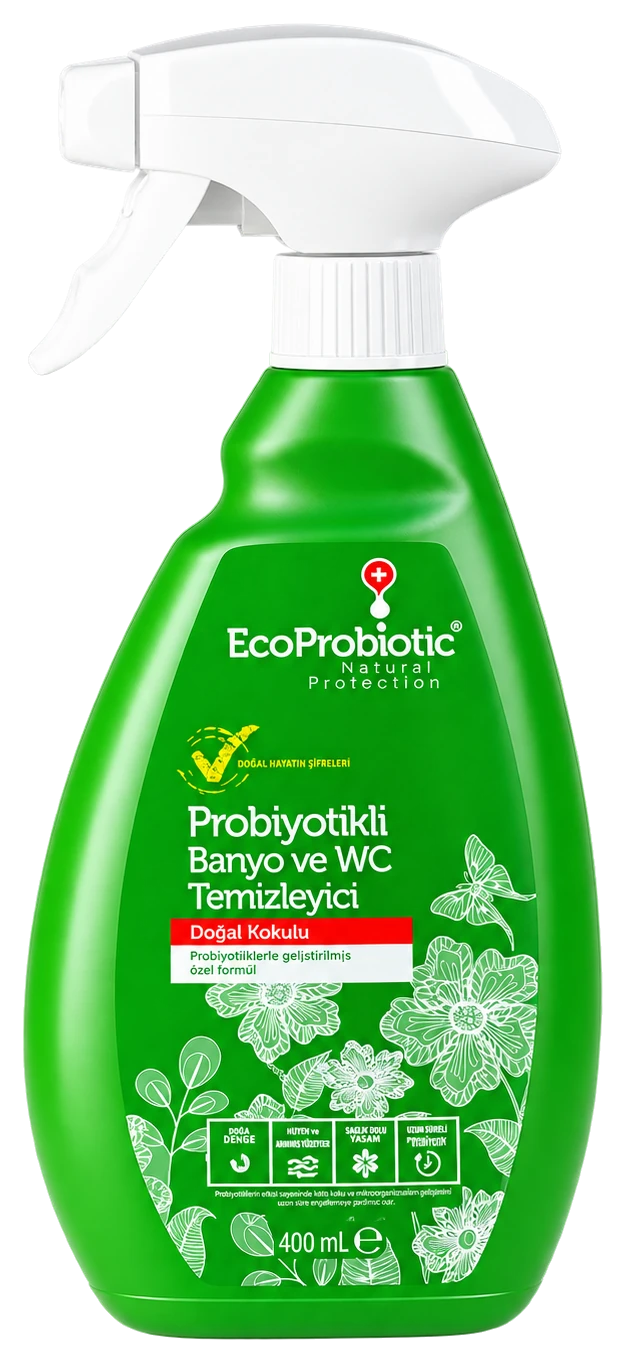
Probiotic Bathroom & WC Cleaner 400 ml spray bottle
  • Nonionic surfactants

    Lift dirt and grease off the surface. Gentle, with no sharp smell left behind.

  • Enzymes

    Break organic residue into small pieces, so there is less raw material for odor.

  • Polycarboxylates

    Bind hard-water minerals, so water spots and residue have a harder time sticking.

  • Probiotics

    Stay on the surface after cleaning and keep working on newly built-up residue.

  • A small amount of fragrance and preservative

    Protects the product and leaves a light, natural scent in the bathroom.

What's not in the bottle

  • Chlorine
  • Ammonia
  • Phosphate
  • Parabens
  • SLS
  • Muriatic acid
  • Caustic soda
  • Alcohol
  • Bleach

Bleach · muriatic acid

  • In a closed bathroomSharp vapor that stings the throat
  • ContentsChlorine or acid
  • After cleaningThe work on the surface ends
  • ScentIts own smell dominates
  • Faucets and marbleAcid can damage the surface

Probiotic cleaner

  • In a closed bathroomNo sharp vapor
  • ContentsNo chlorine, no acid
  • After cleaningProbiotics stay on the surface
  • ScentTargets the source of the smell
  • Faucets and marbleListed on the label as suitable surfaces

Bathroom routine

Three surfaces, one bottle.

I

Toilet and drain

  1. Spray under the toilet rim and into the drain opening.
  2. Brush dirty and yellowed areas.
  3. After a few minutes, flush or rinse with water.
  4. Also wipe the seat, the surrounding area and the floor in front of the toilet.
II

Shower and bathtub

  1. Spray onto the surface and silicone sealant.
  2. Scrub dirty spots with a sponge or brush.
  3. Rinse with water, then dry the glass and tiles.
III

Sink and faucets

  1. For light dirt, spray onto the surface or a cloth.
  2. Wipe with a damp cloth, and don't forget the drain opening.
  3. Rinse with water if you like.
Evening tip

After the last use of the day, spray the drain opening once or twice. That gives the probiotics the whole night to work on the residue.

Where to use it

  • Shower
  • Bathtub
  • Toilet
  • Sink
  • Faucets
  • Tiles
  • Silicone sealant
  • Marble
  • Drain opening
EcoProbiotic Probiotic Bathroom & WC Cleaner, 400 ml green spray bottle

EcoProbiotic Clean

Probiotic Bathroom & WC Cleaner

A probiotic spray for the bathroom and toilet. It cleans the odor-causing residue in drains and toilets; the probiotics inside stay on the surface after wiping and work on newly built-up residue. Contains no chlorine or acid and gives off no sharp vapor in a closed bathroom.

Volume
400 ml
Scent
Natural scent
Format
Trigger spray
  • Targets the source of drain and toilet odor
  • Probiotics stay on the surface
  • No chlorine or acid, no sharp vapor
  • One bottle for the whole bathroom

Free from

  • Chlorine
  • Ammonia
  • Phosphate
  • Parabens
  • SLS
  • Muriatic acid
  • Caustic soda
  • Alcohol
  • Bleach
Buy now

What users say

4.7 / 5

20 verified reviews

★★★★★
gets rid of toilet odor for a long time and leaves it smelling clean, great product.
Ç*** Ö.
★★★★★
The water stains on the shower screen were honestly driving me crazy 😅 Cleaning got a lot easier, and I got nice results on the toilet too. Best of all, it doesn't have a sharp smell like bleach. I really liked it.
Z**** G.
★★★★★
I use it for the sink and toilet, and the spray makes it really convenient. It's especially good at removing soap residue in the sink. I spray it and let it sit a bit, so there's no need for much scrubbing. The scent isn't heavy either, I liked it 😊
A**** K.
★★★★★
easy to use in the bathroom, on the toilet, on the marble etc. and on top of being odorless it's this effective, which surprised me too :)
L**** K.
★★★★★
Very happy with how it cleans, it gives good results on the toilet and sink. The scent isn't bothersome either. It just runs out a bit fast with heavy use, I wished I'd bought a bigger one. Other than that I really liked it, I'd buy it again.
M**** A.
★★★★★
Water stains on the shower screen and cleaning the toilet were the things I struggled with most. I always had to keep scrubbing to get the marks off the shower glass. Cleaning is easier with this product, and I got really good results on the toilet too. And it's great that it doesn't have that sharp bleach smell. I loved it, I'd buy it again.
H**** K.

Frequently asked questions

Toilet odor, drain smell, bathroom mold: what people ask.

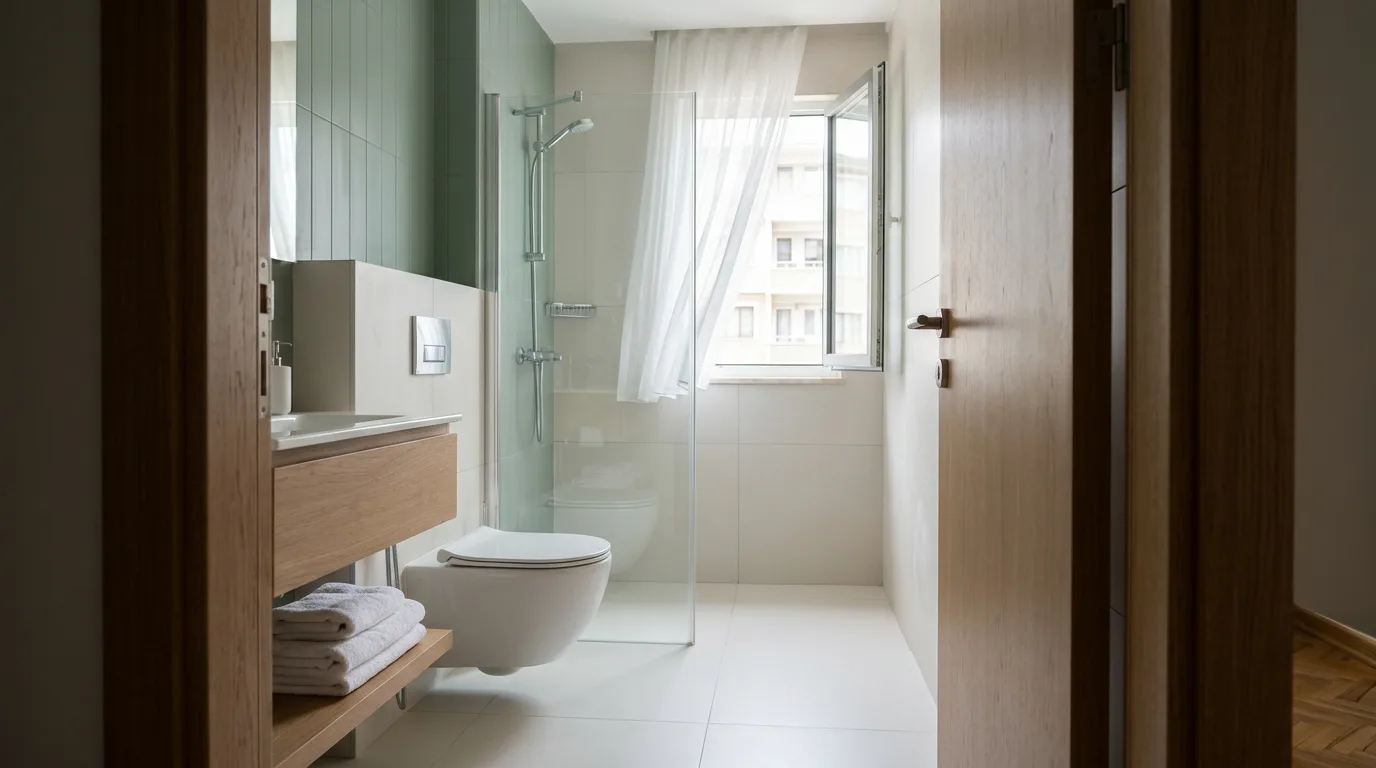
A fresh, bright bathroom seen through a half-open door

The door closes.
Freshness remains.

View the product